![月刊地域医学WEB版[MONTHLY COMMUNITY MEDICINE]](https://chiiki-igaku.jp/wp-content/uploads/2026/05/logo_chiiki.png)
Yoshito Hirota1,4, Takahiro Mochizuki2,4, Masahiro Nishimura3,4
1 Community Comprehensive Care Center Ibuki
2 Kimitsu City National Health Insurance Obitsu Clinic
3 Nara Tsuge Clinic
4 Japan Association for Development of Community Medicine, Institute for Community Medicine
Corresponding author: Yoshito Hirota (hirotay@jadecom.jp)
Community Comprehensive Care Center Ibuki, 58‑1 Suijo, Maibara-shi, Shiga-ken 521‑0314, Japan
Received 2026 Apr 1 / Accepted 2026 May 19
Abstract
Objective: This study investigated how organizational factors within primary care clinics were associated with the number of patients seen in fever outpatient services during the COVID‑19 pandemic.
Methods: Using a database compiled from administrative claims data submitted by clinics affiliated with the Japan Association for Development of Community Medicine (JADECOM), we conducted group‑based trajectory modeling to classify trends in monthly fever outpatient visits per physician between January 2022 and May 2023. Clinic characteristics were additionally assessed through a questionnaire survey administered from April 10 to 30, 2025, and compared across trajectory groups.
Results: Among 11 eligible clinics, two distinct trajectory groups emerged: a low‑volume group (n=8) and a high‑volume group (n=3). The mean monthly number of fever outpatient visits per physician was 66.2 ± 33.1 for the high‑volume group, compared with 22.9 ± 18.2 for the low‑volume group. High‑volume clinics employed more physicians (3.0 ± 1.0 vs. 1.5 ± 0.7), more often assigned fever cases to physicians other than those handling general outpatient care (100% vs. 0%), imposed fewer restrictions on accepting fever patients (0% vs. 37.5%), and perceived their fever outpatient services as more essential to their community (5.0 ± 0.0 vs. 4.3 ± 1.2). Conclusion:This study indicates that primary care clinic capacity to manage fever clinics during contagious disease outbreaks is influenced not only by staffing levels but also by workflow design, role allocation, and the operational burden associated with fever clinic services.
Keywords: COVID‑19, fever clinic, primary care, infectious disease control, organizational management
Introduction
Following the first confirmed case of COVID‑19 in Japan in January 2020, the country experienced a rapid accumulation of cases and repeated outbreaks, reflecting the high transmissibility of SARS‑CoV‑2 1). From January 2022 until the reclassification of COVID‑19 from a Category II equivalent to Category V infectious disease in May 2023, Japan underwent its sixth, seventh, and eighth waves of the pandemic, each characterized by sharp rises in case numbers 2). During this period, COVID‑19 was legally classified under Japan’s Infectious Diseases Control Law as a “Category II equivalent” disease, a designation applied to conditions requiring strict public‑health intervention, such as tuberculosis or severe acute respiratory syndrome (SARS). This classification enabled strong administrative measures and underscored the need for structured clinical pathways to safely manage suspected cases 3).
During this period, public‑health measures included active follow‑up by local public health centers, mandatory self‑quarantine periods, and restrictions on daily activities, which amplified both individual burden and community concern 4). For the early identification of COVID‑19 cases and the prevention of further transmission, dedicated “fever clinics” were established in community settings as a practical and essential measure to maintain access to care while preventing nosocomial spread. In Japan, fever clinics refer to designated outpatient services—most embedded within primary care clinics 5,6)—specifically organized to evaluate patients with fever or suspected contagious disease while minimizing transmission risk through temporal and spatial separation from routine outpatient care 7).
As a result, primary care physicians—while continuing routine care such as chronic disease management and preventive services—were required to assume an additional role as gatekeepers for the COVID‑19 outbreak, providing initial assessment and triage for symptomatic patients at the community level. This expanded responsibility was largely undertaken within existing clinic infrastructures, placing primary care clinics at the forefront of the community‑based response.
Despite their essential role, the organizational structures of fever clinics and their relationship to patient volume have not been fully examined. Understanding which clinic characteristics are associated with higher or lower fever outpatient capacity is critical for planning effective responses to future contagious disease outbreaks. The purpose of this study was to investigate how the organizational structure of fever clinics was associated with patient volume during the COVID‑19 pandemic.
Methods
1. Study Setting
The Japan Association for Development of Community Medicine (JADECOM) operates a nationwide network of medical facilities across Japan. The organization has developed the J‑CHIN (JADECOM Community Health Information Network) database, which aggregates administrative claims data and laboratory data from participating clinics 8). This study utilized the J‑CHIN database and conducted a questionnaire survey among clinics contributing data to the system.
2. Data extraction, inclusion and exclusion criteria
Fever outpatient visits between January 1, 2022, and May 31, 2023, were identified using specific medical reimbursements and diagnostic tests defined by the Ministry of Health, Labour and Welfare 9). The medical reimbursements used to identify fever outpatient visits were “Emergency Care Fee” (claim code: 180065850, 180065650) and “Triage Fee” (claim code: 113032950) for visits occurring on or before May 7, 2023. For visits occurring on or after May 8, 2023, the following medical reimbursements were used for identification: “Specified Disease Care Fee” (claim code: 113045550, 113045450), “Emergency Care Fee” (claim code: 113045850), and “Triage Fee” (claim code: 113045350). In addition, laboratory tests used to identify fever outpatient visits included SARS‑CoV‑2 nucleic acid amplification and antigen tests, as well as multiplex nucleic acid or antigen tests capable of simultaneously detecting SARS‑CoV‑2, influenza, and/or respiratory syncytial virus (RSV). Monthly counts of fever outpatient visits were calculated for each clinic. Clinics that did not submit data for two or more consecutive months were excluded. Patients who visited multiple times on the same day were counted once, whereas visits occurring on different days were counted separately.
3. Questionnaire Survey
An anonymous online questionnaire was administered to clinic representatives contributing data to J‑CHIN between April 10 and 30, 2025. Respondents provided information related to the period when their COVID‑19 countermeasures were at their peak and when the volume of fever patients was highest. The questionnaire asked about how fever outpatient services were organized, including whether they were located separately from general outpatient care, how their consultation times were scheduled, whether the same physicians handled both services, and whether upper limits were placed on the number of fever patients accepted. It also inquired about the implementation of patient‑attribute–based acceptance restrictions (e.g., accepting established patients only) and whether patients were required to call before visiting. Respondents additionally reported the number of weekly sessions for general and fever outpatient care, the numbers of full‑time‑equivalent (FTE) physicians and nurses, perceived manpower shortages and psychological burden (each rated on a five‑point Likert scale), the perceived importance of their fever services to the community, and the presence of another facility offering fever care within a 15‑minute drive.
4. Rurality Index for Japan (RIJ)
The Rurality Index for Japan (RIJ) was calculated for each clinic 10). RIJ quantifies rurality based on population density, distance to the nearest secondary emergency hospital, whether the location is on an island, and whether it is designated as a heavy snowfall area. Scores range from 1, indicating urban areas, to 100, indicating rural areas.
5. Statistical Analysis
Group‑Based Trajectory Modeling
Monthly counts of fever outpatients were divided by the number of FTE physicians to calculate the number of fever patients per physician. Missing monthly data were imputed using the previous month’s value. Group‑based trajectory modeling (GTM) was performed using the time‑series data of the number of fever outpatient visits per physician for each clinic. GTM is a statistical method that classifies individuals or facilities into multiple distinct groups (trajectories) based on longitudinal patterns 11). The number of groups and the shape of the trajectories were determined using the Bayesian Information Criterion. The adequacy of group membership classification was evaluated using the Average Posterior Probability of Assignment, with values of at least 0.7 considered acceptable.
Comparison of Clinic Characteristics
For each trajectory group identified through GTM, clinic characteristics obtained from the questionnaire survey were compared. Because the sample size was small, standardized mean differences (SMDs) were used to compare clinic characteristics 12). An SMD of 0.20 was interpreted as a small difference, 0.50 as a moderate difference, and 0.80 as a large difference 13). All analyses were conducted using R software (version 4.4.1).
6. Ethical Considerations
This study complied with the Declaration of Helsinki and the ethical guidelines for medical and biological research involving human subjects issued by the Ministry of Health, Labour and Welfare. The study protocol was approved by the JADECOM Ethics Committee (Approval No. 20250326‑01). Participants were informed in advance, in writing, about anonymity, the protection of personal information, and the voluntary nature of their participation.
Results
1. Study Population
Among the 14 clinics contributing data to the J‑CHIN database during the study period, three were excluded because they did not submit data for two or more consecutive months. As a result, 11 clinics were included in the trajectory analysis. All 14 clinics responded to the questionnaire survey, resulting in a 100% response rate.
2. Trajectory Analysis
As shown in Figure 1, clinics were classified into two groups based on the trajectory of fever outpatient visits per physician: a “low‑volume group” consisting of eight clinics and a “high‑volume group” consisting of three clinics. The Average Posterior Probability of Assignment (APPA) exceeded 0.7 for both groups, indicating adequate classification quality.
3. Clinic Characteristics
Table 1 summarizes the characteristics of each group. Compared with the low‑volume group, clinics in the high‑volume group consistently assigned fever outpatient care to physicians who were different from those responsible for general outpatient services, and they examined fever patients concurrently with general outpatient visits. In addition, no clinics in the high‑volume group operated with patient‑attribute–based acceptance restrictions, such as limiting fever outpatient visits to established patients (i.e., patients who had previously visited the clinic). The number of FTE physicians was higher in the high‑volume group (3.0 ± 1.0) than in the low‑volume group (1.5 ± 0.7; SMD = 1.78), and the number of FTE nurses was also greater in the high‑volume group (3.7 ± 1.2 vs. 2.4 ± 1.4; SMD = 0.98). Respondents from high‑volume clinics reported feeling greater manpower shortages and perceived their fever outpatient services as more important to their community. There was no substantial difference in the Rurality Index for Japan between the two groups.
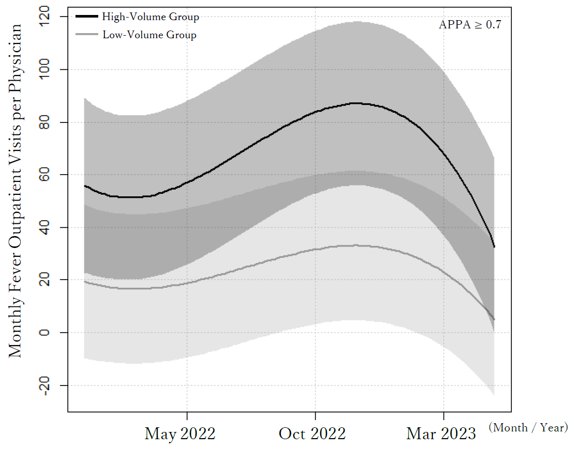
Figure 1. Trajectory Groups of Fever Outpatient Visits per Physician
This figure illustrates the results of the group‑based trajectory modeling, showing two distinct patterns of fever outpatient visits per physician from January 2022 to May 2023. Clinics were classified into a low‑volume group and a high‑volume group based on their longitudinal trajectory patterns. The Average Posterior Probability of Assignment (APPA) exceeded 0.7 for both groups.
Table 1. Comparison of Clinic Characteristics Between Low‑Volume and High‑Volume Groups
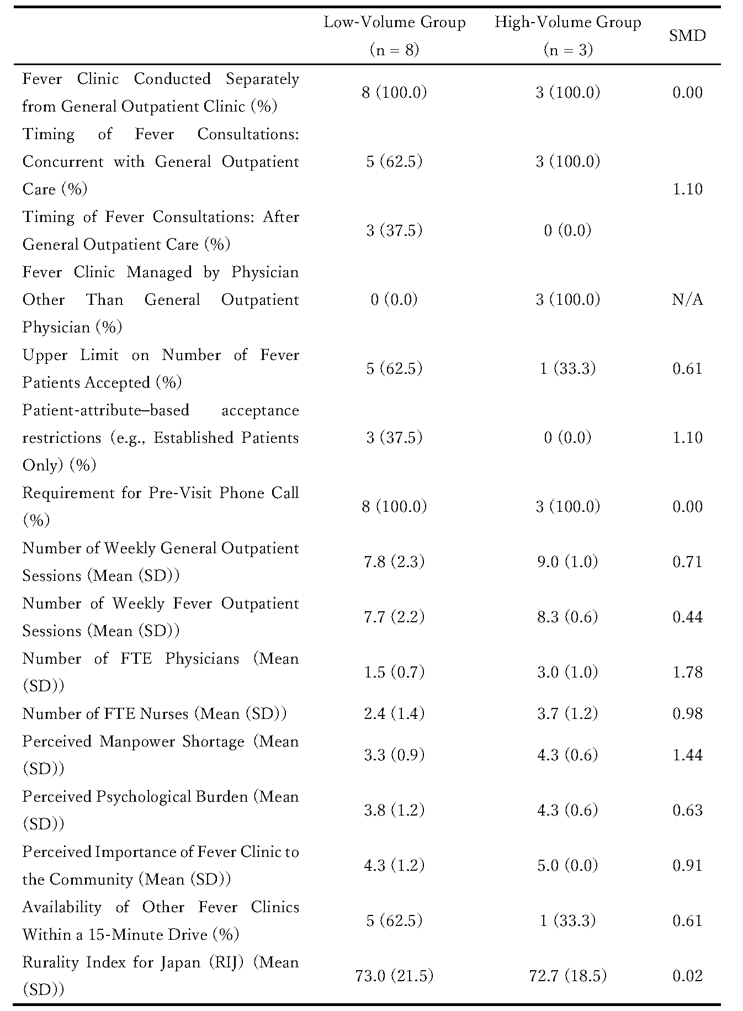
This table presents the characteristics of clinics in the low‑volume and high‑volume groups, including organizational structure, staffing levels, operational practices, and perceived burden and importance of fever outpatient services. Standardized mean differences (SMDs) are provided to indicate the magnitude of differences between the groups.
Abbreviation: SMD, Standardized mean difference; SD, Standard deviation; FTE, Full‑time‑equivalent.
Discussion
This study identified several organizational characteristics that were associated with greater fever outpatient patient volume during the COVID‑19 pandemic. Clinics in the high‑volume group employed more physicians and nurses, allocated roles more clearly by assigning fever outpatient services to different physicians from those handling general outpatient care, conducted fever consultations concurrently with general outpatient services, and avoided the implementation of patient‑attribute–based acceptance restrictions. These clinics also expressed a stronger sense of mission regarding the importance of their fever outpatient services to their community.
Clinics that managed a higher number of fever outpatients had larger numbers of full‑time‑equivalent physicians and nurses compared with those that managed fewer such patients. Prior international research has shown that during COVID‑19 lockdowns, clinics with multiple physicians experienced a 45.3% smaller reduction in consultations for chronic disease complications and maintained a 13.4% higher rate of proactive outreach to patients with chronic conditions compared with solo practices 14). Furthermore, a systematic review comparing solo and group practices reported that practices with multiple physicians within a single clinic demonstrated superior performance in areas such as service capacity and clinical processes 15). These findings suggest that, in preparation for future large‑scale contagious disease outbreaks, the presence of multiple physicians within a single clinic may be important for ensuring adequate capacity to manage patient demand.
However, despite having more physicians and nurses, clinics in the high‑volume group reported a stronger subjective sense of staff shortage than clinics in the low‑volume group, representing an apparently paradoxical finding. This suggests that, during infectious disease surges, clinic burden may arise from factors that cannot be addressed by staffing levels alone. Operating fever outpatient services during the COVID‑19 pandemic required strict infection prevention measures in addition to routine clinical care, including donning and doffing personal protective equipment, managing patient flow and physical separation, environmental disinfection, patient communication, staff coordination, and administrative tasks for patients waiting in isolated spaces 7). Moreover, all clinics in the high‑volume group conducted fever consultations concurrently with general outpatient services, which likely required more rigorous infection‑control practices to prevent transmission to non‑febrile patients and may have amplified perceptions of staff shortage. In addition, the study clinics were located in sparsely populated rural areas, with a mean Rurality Index of Japan (RIJ) score of approximately 73. Compared with clinics in the low‑volume group, clinics in the high‑volume group were less likely to have another clinic offering fever outpatient services within a 15‑minute drive. This suggests that limited availability of alternative healthcare facilities may have compelled high‑volume clinics to assume a disproportionate share of responsibility for primary care within their communities, further increasing structural workload and contributing to heightened perceptions of insufficient staffing.
By contrast, clinics in the low‑volume group had a smaller mean number of full‑time equivalent physicians (1.5), yet 62.5% of these clinics had another facility providing fever outpatient services within a 15‑minute drive. This suggests that regional coordination among clinics may compensate for limited resources at individual clinics. Prior studies in chronic disease management have shown that inter‑clinic collaboration improves care quality 16), indicating that a similar approach could be effective for fever outpatient services.
Role allocation and workflow design also appeared to influence clinic capacity. High‑volume clinics were more likely to assign fever outpatient care to physicians different from those responsible for general outpatient services and to conduct fever consultations concurrently with general outpatient care. Compared with the low‑volume group, physicians in the high‑volume group were responsible for fewer general outpatient sessions per physician, suggesting that individual workload was relatively reduced. This organizational arrangement may have enabled dedicated physicians to manage fever outpatient services in parallel with general outpatient care. A previous study examining emergency department care for patients with suspected COVID‑19 reported that although the acceptance rate of emergency requests during the pandemic was significantly lower than that in the corresponding period of the previous year, operational improvements in staff role allocation, patient flow, and examination procedures were associated with a significant improvement in acceptance rates from April to May within the same year 17). These findings suggest that clinic capacity to manage fever patients may depend not only on human resources but also on factors such as the division of roles and the organization of clinical workflows, particularly through adaptive operational changes during pandemic surges.
Furthermore, high‑volume clinics were less likely to restrict acceptance of fever patients and more likely to view their fever clinic services as critical to their community. A previous study examining the response capacity of community health centers during the COVID‑19 pandemic reported that factors such as sufficient human resources, clear role allocation, well‑established workflows, and the continuous cultivation of emergency response skills and awareness were essential 18). These findings suggest that maintaining adequate clinic capacity to manage fever patients may require ongoing efforts to strengthen emergency preparedness and situational awareness.
This study has several limitations. First, the number of clinics included in the analysis was small, and the study primarily examined clinics located in rural, low‑population areas within their respective prefectures, which may limit the generalizability of the findings. The small sample size also required reliance on SMD rather than hypothesis testing, preventing definitive conclusions. Second, the observed number of fever outpatient visits should not be interpreted as a direct measure of clinic capacity. Patient volume may have been influenced by local demand, regional epidemic intensity, pediatric population characteristics, and the availability of alternative healthcare facilities, which were not captured in this study. Third, unmet healthcare needs could not be assessed, as information on patients who were advised not to visit, redirected elsewhere, or turned away due to informal capacity constraints was unavailable. In addition, fever clinics were not limited to patients with suspected COVID‑19, and visit counts therefore represent a heterogeneous population. Fourth, although the RIJ 10) was used to assess rurality, factors not included in the index, such as actual accessibility to clinics, were not evaluated. Despite these limitations, the inclusion of clinics from various regions across Japan and the use of claims data to accurately quantify fever outpatient visits strengthen the study’s validity. Additionally, the study provides valuable insights by objectively visualizing operational differences that had previously been based mainly on anecdotal experience.
Conclusion
This study elucidated the relationship between clinic organizational characteristics and fever outpatient patient volume during the COVID‑19 pandemic. The findings indicate that clinic capacity was shaped not only by staffing levels but also by workflow design, role allocation, and the operational burden associated with concurrent fever and general outpatient care. Strengthening organizational preparedness and clinical workflows, in addition to securing human resources, may be essential for sustaining primary care services during future infectious disease surges.
Acknowledgments
We express our gratitude to all participating clinics for their cooperation.
Use of Generative AI: Generative AI (M365 Copilot, GPT‑5 Chat model) was used to support English translation of this manuscript.
Conflict of Interest: The authors declare no conflicts of interest.
References
1) Ministry of Health, Labour and Welfare. “Chronology of COVID‑19 Countermeasures.” https://www.tmghig.jp/cms_upload/63a792be40033dfc906d11c7f734ac27.pdf (accessed 2025 Oct 2)
2) Ministry of Health, Labour and Welfare. “Domestic Trends in COVID‑19 Occurrence.” https://www.mhlw.go.jp/content/10906000/001094012.pdf (accessed 2025 Mar 6)
3) Japanese Law Translation. “Act on the Prevention of Infectious Diseases and Medical Care for Patients with Infectious Diseases.” https://www.japaneselawtranslation.go.jp/en/laws/view/2830 (accessed 2026 Apr 25)
4) Kitahara K, Nishikawa Y, Yokoyama H, et al: An overview of the reclassification of COVID-19 of the Infectious Diseases Control Law in Japan. Glob Health Med 2023; 5(2): 70-74.
5) Ministry of Health, Labour and Welfare. “Special Measures Related to COVID‑19.” https://www.mhlw.go.jp/content/001219109.pdf (accessed 2025 Dec 7)
6) Ministry of Health, Labour and Welfare. “Overview of the 2022 Medical Facility Survey Results.” https://www.mhlw.go.jp/toukei/saikin/hw/iryosd/22/dl/02sisetu04.pdf (accessed 2025 June 23)
7) Japanese Society of Infectious Diseases, et al. “Guidelines for the clinical management of patients with COVID‑19 by 5 academic societies.” https://www.mhlw.go.jp/content/001580139.pdf (accessed 2026 Apr 25)
8) JADECOM-PBRN. “Major Research Activities.” https://jadecom-pbrn.jp/about/research/ (accessed 2026 Feb 5)
9) Tokyo Medical Association. “Temporary Measures for Medical Service Fees Related to COVID‑19.” https://www.tokyo.med.or.jp/wp-content/uploads/application/pdf/20230502-kaniban.pdf (accessed 2023 Dec 7)
10) Kaneko M, Otani T, Okayama M: Rurality Index for Japan (RIJ): a new method to classify the rurality of areas in Japan. BMJ Open 2023; 13(6): e068800.
11) Nagin DS: Group-based modeling of development. Cambridge, Massachusetts, Harvard University Press, 2005, 1-171.
12) Gliner J, Vaske J, Morgan G: Null Hypothesis Significance Testing: Effect Size Matters. Human Dimensions of Wildlife 2001; 6: 291-301.
13) Cohen J: The effect size index: d, Statistical Power Analysis for the Behavioral Sciences. Hillsdale, New Jersey, Lawrence Erlbaum Associates, 1988, 20-27.
14) Zaytseva A, Verger P, Ventelou B: United, can we be stronger? Did French general practitioners in multi-professional groups provide more chronic care follow-up during lockdown?. BMC Health Serv Res 2022; 22(1): 519.
15) Damiani G, Silvestrini G, Federico B, et al: A systematic review on the effectiveness of group versus single-handed practice. Health Policy 2013; 113(1-2): 180-187.
16) Hirao R, Fujishima Y, Suzawa M, et al: [Analysis of theTrend of Diabetic Patients after Strengtheneing of Cooperation among Community Based Medicine]. Journal of the Japan Diabetes Society 2011; 54: 899-905. Japanese.
17) Yamagishi T, Kashiura M, Matsui T, et al: [Effectiveness of an infection control system for examining suspected infectious disease patients in emergency department and fever outpatient room during the COVID-19 pandemic]. Journal of Japanese Society for Emergency Medicine 2021;24:389-399. Japanese.
18) Lin Y, Ge XH, Liu P, et al: A retrospective analysis of coping competence among community health centers during the COVID-19 pandemic in Shanghai, China: Coping strategies for future public health emergency events. Glob Health Med 2023; 5(3): 151-157.
新型コロナウイルス感染症流行期における診療所での発熱外来の体制と患者数の関連性の検討
弘田義人1,4,望月崇紘2,4,西村正大3,4
1地域包括ケアセンターいぶき,2君津市国保小櫃診療所,3奈良市立都祁診療所,
4地域医療振興協会地域医療研究所
連絡先 弘田義人(hirotay@jadecom.jp) 〒521-0314 滋賀県米原市春照58-1 地域包括ケアセンターいぶき
原稿受付 2026年4月1日/掲載承認 2026年5月19日
抄録
目的 COVID-19流行期における診療所の発熱外来の運営体制と患者数の関連性を検討する.
方法 当法人診療所のレセプトデータを集積したデータベースを用い,集団軌跡分析により2022年1月~2023年5月の医師1人当たり月間発熱外来患者数の推移パターンを分類し,質問紙調査(2025年4月)で得た診療所特性を群間比較した.
結果 集団軌跡分析の結果,11診療所は発熱外来患者数の少ない群(8診療所)と多い群(3診療所)に分類され,医師1人当たり月平均患者数はそれぞれ22.9±18.2人,66.2±33.1人だった.多い群では,医師数(3.0±1.0人 vs 1.5±0.7人)が多く,一般外来と別の医師が発熱外来を担当する割合が高く(100% vs 0%),受け入れ制限基準の運用が少なく(0% vs 37.5%),自施設の地域にとっての重要性をより強く感じていた(5.0±0.0 vs 4.3±1.2).
結論 感染症流行期の診療所の発熱外来対応能力は,人的資源だけでなく,実質的な業務負荷,役割分担,診療や業務の運用方法にも影響されることが示唆された.
キーワード:COVID-19,発熱外来,診療所,感染症対策,組織運営